
Infant formula manufacturing is New Zealand’s highest-value and most heavily scrutinised dairy export to China, and it is held to a standard no other food category matches. Producing it for that market means satisfying two separate layers of Chinese registration and an exacting set of compositional and safety rules — and, on the factory floor, proving near-perfect contamination control, hygiene and batch-to-batch consistency.
This is a more detailed look at the equipment behind that, and a companion to the APS overview of equipment for exporting to China. Advanced Packaging Systems (APS) supplies and supports this equipment for New Zealand producers.
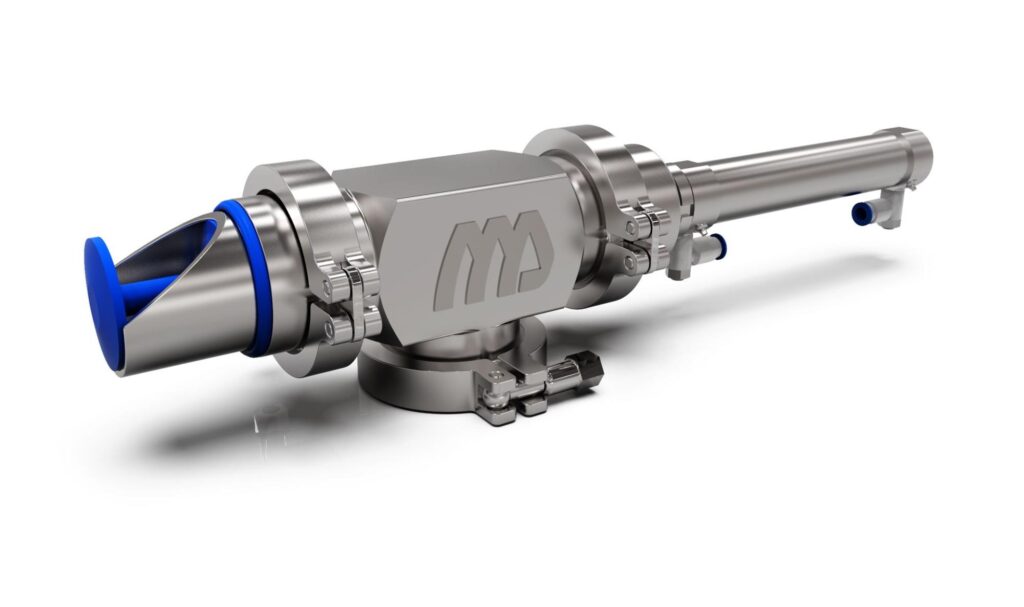
Dinnissen Sampling Systems – ATEX Certified
China’s Infant Formula Rules: Two Layers of Registration
Infant formula faces a double registration requirement. Like other food producers, the manufacturing facility must be registered with China’s General Administration of Customs (GACC) through the CIFER system under Decree 248. On top of that, each product formula must be registered with the State Administration for Market Regulation (SAMR) against China’s national infant-formula standards before it can be produced for sale.
Those standards were overhauled in the 2021 revision. GB 10765-2021 for infant formula, GB 10766-2021 for older-infant formula and GB 10767-2021 for young-children formula which came into force on 22 February 2023 and tightened compositional and safety requirements. Products must now be made to a formula registered under the new standards. The detail is complex and continues to evolve, and manufacturers should confirm the current requirements with SAMR, GACC or a qualified regulatory adviser; this article covers the equipment side, not the registration process.
Why Infant Formula Is the Most Demanding Dairy Product to Make
What the regulations translate to on the line is an unusually low tolerance for error. Infant formula must be effectively free of metal and foreign-body contamination, made under cleanroom-grade hygiene, matched precisely to a registered nutritional formula, and traceable in full. Each of these operational demands maps directly onto processing equipment — and it is where a specialist equipment partner earns its place.

Dinnissen Powder Blending
Contamination Control: Metal and Foreign Bodies
Contamination control is the single most critical requirement for infant nutrition. Russell Finex vibratory sieves check-screen base powders and finished formula to remove foreign material and oversized agglomerates, while a high-intensity Russell Easy-Clean Magnetic Separator™ captures ferrous metal that can enter during milling, blending and conveying. Layering sieving with magnetic separation gives the documented, multi-stage contamination defence that infant-formula quality assurance demands. The relevant Chinese standards and the detail of this approach are set out in the APS article on magnetic separation in food powder processing.
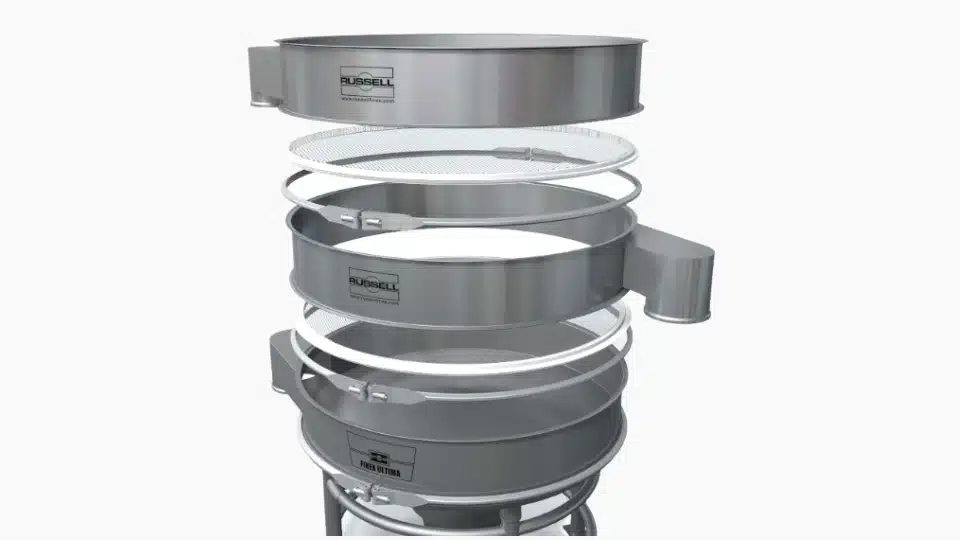
Russell Finex Ultima
Hygienic, Contained Powder Handling
Handling base powders, protein and premixes without exposing them to the environment is essential in a hygiene-critical process. Dinnissen bulk-bag handling, conditioning and filling equipment is available in a High-Care cleanroom execution developed specifically for baby milk powder, as described in the APS guide to bulk bag unloaders, conditioners and filling stations. For contained transfer and storage between steps, Hanningfield supplies GMP-grade stainless steel IBCs and contained powder-handling equipment. Keeping the powder enclosed protects it from contamination and cross-contamination and keeps dust out of the cleanroom.

Hanningfields IBC’s
Precise Mixing and Standardisation
A registered infant-formula recipe only delivers its intended nutrition if every batch is mixed to match it. Silverson high shear mixers standardise and recombine the milk base, disperse and hydrate ingredients such as lecithin and stabilisers, and incorporate vitamin and mineral premixes evenly so that micro-nutrients dosed at low inclusion rates are distributed uniformly through the batch. Even distribution is what allows a manufacturer to guarantee that every tin meets the registered formula — the same high shear principles used across dairy processing.
Consistency, Traceability and the Registered Formula
Chinese infant-formula rules place heavy weight on traceability and on production matching the registered formula exactly. That makes consistent, well-controlled processing equipment more than a quality nicety — it is part of how a manufacturer evidences that what leaves the line is what was registered. Uniform mixing, reliable contamination control and contained handling all contribute to a product record that can withstand audit and inspection.
A Practical Foundation, Not a Compliance Shortcut
No machine makes a product compliant on its own; formula registration, facility registration, testing and documentation all remain the manufacturer’s responsibility. But the operational standards that sit underneath a China infant-formula registration — contamination control, cleanroom hygiene, precise composition and traceability — are delivered by the equipment on the line. Getting that equipment right makes the compliance task easier to evidence and reduces the risk of a costly failure in a market with little tolerance for it.
Infant Formula Manufacturing in New Zealand
Advanced Packaging Systems supplies and supports Russell Finex, Dinnissen, Silverson and Hanningfield equipment for New Zealand dairy and infant-nutrition manufacturers, many of whom supply China. The APS technical team can specify and integrate the contamination-control, powder-handling and mixing equipment behind export-grade infant formula, and support it locally from its Auckland base. Contact APS to discuss equipment for an infant formula or dairy line serving the Chinese market.
Planning a processing or packaging project?
Speak with Advanced Packaging Systems about equipment selection, line integration, and local support in New Zealand.
- Local technical and commercial support in New Zealand.
- Obligation-free advice on equipment and line fit.
- Useful next steps, even if your project is still early-stage.