
When a new machine has to be justified, the business case usually starts with the purchase price and works forward: how much labour it saves, how much more it produces and how long it takes to pay back. Those are the right questions. But one of the biggest factors in equipment ROI is often missing from the spreadsheet: the cost of the downtime the new equipment removes.
This article sets out what a typical equipment ROI calculation includes, why downtime tends to be left out, a simple way to put a figure on it, and what published case studies from APS partners show about where the return actually comes from.
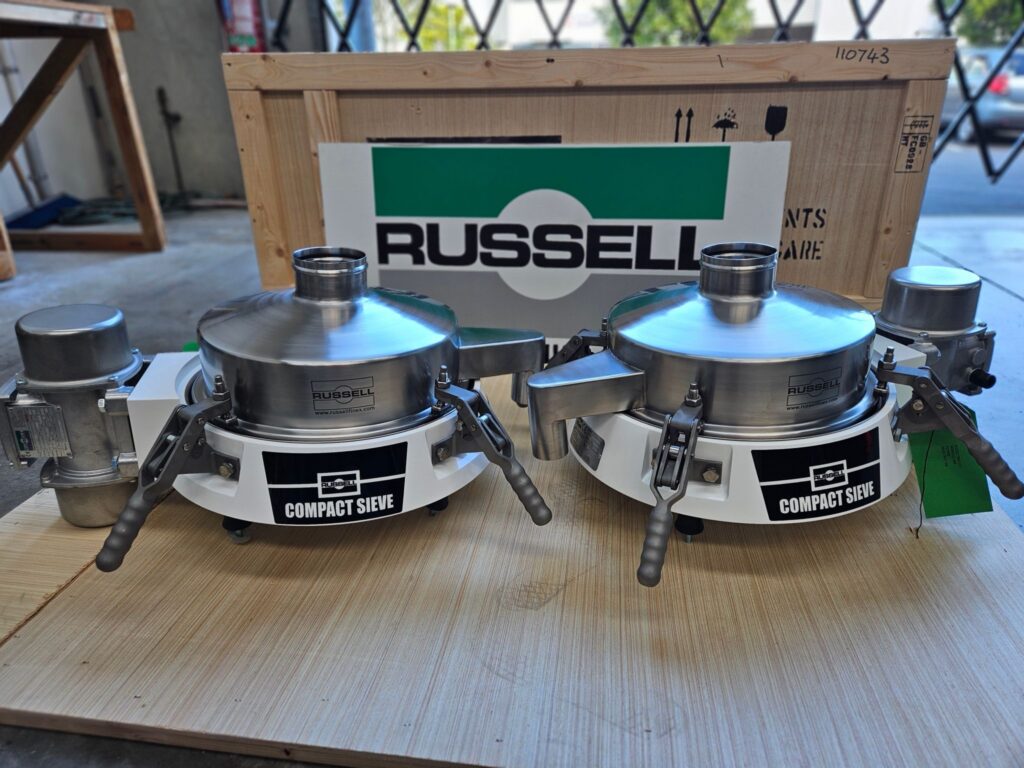
Russell Finex – Ready to commission
What an Equipment ROI Calculation Usually Counts
Most capital requests weigh costs against savings over the working life of the machine:
- Upfront cost. Purchase price, freight, installation, commissioning and training.
- Running costs. Energy, consumables, wear parts and routine maintenance.
- Labour. Operator time per shift, including cleaning and manual handling.
- Output. Throughput per hour, and the capacity available to take on more work.
- Yield and quality. Product lost to waste, rework or rejected batches.
Payback is then the upfront cost divided by the annual net saving. It is a useful headline figure, provided the annual saving is complete.
Why Downtime Gets Left Out
Downtime rarely arrives as a single line item. It is spread across many short stops: a sieve screen that blinds and has to be cleared, a filter cartridge that needs changing, a mixer that takes an hour to strip and clean, a conveyor belt that fails before its time. None of these generates an invoice, so they are easy to miss when a business case is built from purchasing and payroll data.
There is also a habit of treating stops as part of the process. If a line has always paused every hour for cleaning, the lost time stops looking like a cost. It is often only when a new machine removes the stop that its scale becomes clear.
How to Work Out the Cost of Downtime
The cost of downtime is the value of the production that does not happen while the line is stopped, plus the costs that carry on regardless. A simple approach:
- Measure the hours. Log stops for a few weeks, including the short ones, and separate planned stops (cleaning, changeovers, screen or filter changes) from unplanned ones (breakdowns and blockages).
- Value an hour of production. Use the contribution margin of the product that would have been made, meaning the selling price less variable costs, rather than revenue.
- Add the costs that keep running. Operators standing idle, overtime to catch up, and product scrapped on restart.
- Annualise it. Multiply the cost per hour by the hours a year the new equipment is expected to recover.
That annual figure belongs alongside the labour and consumable savings in the equipment ROI calculation. On a line that is already running at capacity, recovered hours can be worth more than the direct savings, because the extra output can be sold.

Dinnissen Big Bag Filling Station
What Partner Case Studies Show
The examples below come from APS partners and from installations APS has supported in New Zealand. Each shows a different source of downtime, and how removing it fed into the return. All figures are as published by the partner or customer.
Cleaning and Changeover Time
A New Zealand contract manufacturer of health supplements replaced its existing screening with the Russell Compact Sieve®. Quick-release disassembly cut cleaning downtime, and the company doubled its production capacity, going on to buy four units.
Consumables That Stop the Line
Filters that rely on bags or cartridges stop production every time an element blocks. Russell Finex has published several cases where its self-cleaning Russell Eco Filter® removed those stops:
- A Canadian waste-oil recycler had an operator cleaning cartridge filters every 10 to 60 minutes. After the change it reported 75% less labour and 50% less maintenance, and expected a return on investment within a year.
- A UK brewery was losing up to 15 minutes in every hour to filter cleaning. Removing that stop saved around 40 hours of downtime a year, alongside £2,000 a year in cartridges.
- A nut producer reported an 8-month payback based only on no longer buying replacement cartridges. Less downtime was a further benefit, but it was not counted in that figure, which shows how easily an ROI calculation can understate the real return.
- A zinc coating producer reported around 15% less production downtime and continuous runs of up to 50 hours without mesh blockage, covered in our article on paint filtration and coatings manufacturing.
Capacity and Uptime
A New Zealand cement producer worked with Dinnissen to lift capacity in a market where any unplanned downtime had direct commercial consequences. The installation, supported locally by APS, increased throughput by around 40 percent and improved process reliability.
Manual Handling
For a New Zealand pharmaceutical manufacturer, APS worked with Hanningfield to automate the sizing and transfer of powders into storage vessels. Replacing a labour-intensive manual process increased productivity and made single 30,000-litre batches possible.
Belt Failures and Unplanned Stops
Wire Belt makes the point in its Flat-Flex® support guide that most metal conveyor belts do not wear out. When they fail in production it is usually for reasons unrelated to belt strength or life, and the resulting downtime “equates to lost opportunity, lost production and lost profits”. The guide lists the 12 most common causes, most of which come down to set-up and maintenance.
For spiral freezers and coolers, Ashworth’s SmartSpiral® system takes a predictive approach, monitoring spirals remotely so that maintenance can be planned and failures prevented before they stop production. Our article on spiral conveyor systems covers the design features that reduce both planned and unplanned downtime.

Ashworth Spiral Freezer
Total Cost of Ownership, Not Purchase Price
Moba makes the same argument for egg grading. Its Forta GT brochure describes total cost of ownership as “an important factor in the decision-making process when investing in a new egg grader”, and ties a lower TCO to proven design and a worldwide service network.
Service is part of that sum. Spare parts held locally, engineers who know the machine and planned maintenance all reduce the hours a line spends waiting. Energy is another running cost that compounds over a machine’s life; our article on lowering energy consumption covers it in more detail.
Questions to Ask Before You Invest
- How many hours a year does the current process lose to cleaning, changeovers and consumable changes?
- How many unplanned stops were there last year, and how long did each take to recover from?
- What is an hour of production worth in contribution margin?
- Is the line at capacity, so that recovered hours can be sold?
- How quickly can spare parts and service reach the site?
- Does the supplier have case studies from a similar application?
Building the Business Case With APS
Advanced Packaging Systems is the New Zealand partner for Russell Finex, Dinnissen, Hanningfield, Wire Belt, Ashworth, Moba and other leading equipment manufacturers. If you are building a business case for new equipment, we can help identify where downtime occurs in your current process and share partner case studies from similar applications. Contact the APS team to start the conversation.
Planning a processing or packaging project?
Speak with Advanced Packaging Systems about equipment selection, line integration, and local support in New Zealand.
- Local technical and commercial support in New Zealand.
- Obligation-free advice on equipment and line fit.
- Useful next steps, even if your project is still early-stage.