
Equipment brochures carry a lot of logos. EHEDG, 3-A, USDA, FDA, ATEX, CE and ISO 9001 can all appear on the same data sheet, and they do not mean the same thing. Some certify a specific machine design after independent evaluation. Some confirm that the materials touching the product are acceptable for food contact. Some apply to the manufacturer’s management systems rather than to any machine at all. And some describe an option that has to be specified when the machine is ordered.
For New Zealand processors the distinction matters because the certification a machine holds is rarely what the regulator asks for, but it is often what an export customer, an auditor or a validation team asks about. This guide explains what each type of certification covers, what New Zealand actually requires, and how to read a certification claim, with a summary of what the manufacturers Advanced Packaging Systems represents hold.
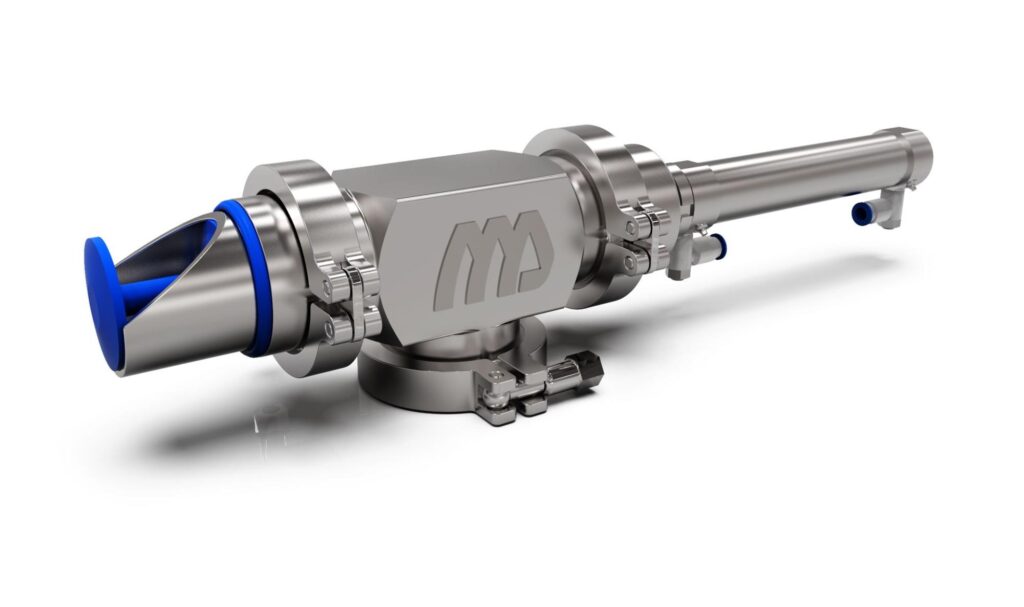
Dinnissen Sampling Systems – ATEX Certified
What New Zealand Requires of Processing Equipment
New Zealand does not require food processing equipment to carry a specific hygienic design certification. Its requirements are outcome-based. Under the Food Regulations 2015, equipment must be made of material that will not contaminate food and must allow effective cleaning and, where appropriate, sanitising. For animal products, the Animal Products Notice: Production, Supply and Processing requires product-contact surfaces to be impervious, non-absorbent, resistant to corrosive substances, non-toxic and able to be cleaned, and only approved maintenance compounds may be used on processing equipment.
How a business demonstrates those outcomes is set out in its risk management programme (RMP) or food control plan, and this is where certifications earn their place. An EHEDG or 3-A certificate is independent evidence that a design is cleanable, which is easier to put in front of a verifier than an argument from first principles. MPI’s operational guideline on the design and construction of dairy premises and equipment, for example, refers to the 3-A Sanitary Standards throughout, as guidance that helps with RMP approval rather than as a legal requirement. Dairy equipment is often built with this in mind: Russell Finex designs its Russell Compact Sieve for milk powder check screening in accordance with FDA and 3-A requirements.
Two further points are often misunderstood. Chapter 3 of the Australia New Zealand Food Standards Code, including Standard 3.2.3 on food premises and equipment, applies in Australia only; New Zealand covers the same ground through its own legislation. And export requirements are market-specific. MPI negotiates overseas market access requirements (OMARs) with each destination market, so what a buyer or regulator in another country expects of a plant has to be checked product by product and market by market.
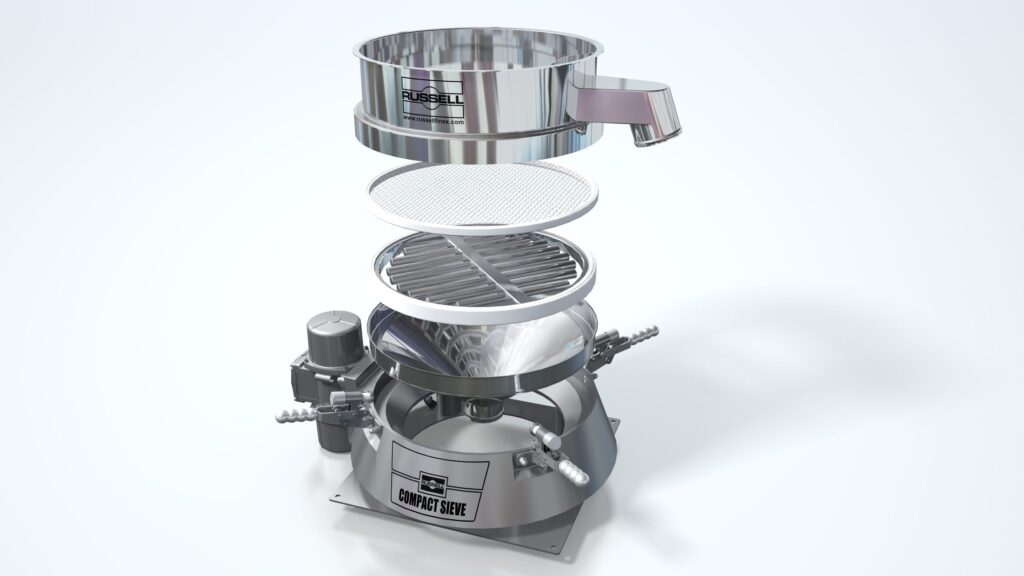
Russell Finex Compact Sieve
Five Kinds of Certification
Most of the confusion clears once certifications are sorted by what they apply to:
- Hygienic equipment design – EHEDG, 3-A, USDA acceptance and NSF. These apply to a specific machine design and address how cleanable it is.
- Food-contact materials – US FDA regulations and EU Regulation 1935/2004. These apply to the materials that touch the product, not to the machine as a whole.
- Hazardous areas – ATEX, IECEx and AS/NZS 60079. These apply where a machine operates in, or creates, a potentially explosive atmosphere.
- Machinery and electrical safety – CE, UKCA and UL. These show conformity with the safety rules of a particular market.
- Company management systems – ISO 9001, ISO 14001 and ISO 45001. These certify how the manufacturer runs its business, not the machine itself.
Pharmaceutical manufacturers have a further layer, covering GMP, electronic records and validation documentation, which is dealt with separately below.
Hygienic Design Certifications: EHEDG, 3-A, USDA and NSF
EHEDG
The European Hygienic Engineering and Design Group publishes guidelines on hygienic equipment design and runs an equipment certification scheme. Certification is awarded to a specific equipment type after its design has been evaluated, and for closed equipment tested for cleanability, by an EHEDG-authorised body. Three claims are commonly made, and they are not equivalent:
- EHEDG certified – a specific model has passed evaluation and holds a certificate.
- Designed in accordance with EHEDG guidelines – the manufacturer has applied the guidelines, but no third party has certified the result.
- EHEDG member – the company belongs to the organisation. Membership says nothing about any particular machine.
All three appear among the manufacturers APS represents. Silverson fits EHEDG-certified shaft seals to its ultra-hygienic in-line mixers and offers fully EHEDG-certified models; Wire Belt designs its Enhanced Hygienic conveyors to EHEDG guidelines; and Hanningfield and Ashworth are EHEDG members. Each is a legitimate claim, but only the first is a certificate for a machine.
3-A Sanitary Standards
3-A Sanitary Standards, Inc. is the US counterpart, with its origins in the dairy industry. It publishes standards for specific equipment types, and a manufacturer may display the 3-A Symbol on a model only after a Third Party Verification (TPV) inspection by an independent evaluator. As with EHEDG, “meets 3-A sanitary standards” and “3-A TPV certified” are different claims. Silverson’s sanitary mixer range is 3-A TPV certified, for example, while the Russell Compact Sieve is described as meeting the requirements of the 3-A sanitary standards.
USDA Acceptance and NSF
“USDA Accepted” indicates equipment that has been reviewed under a US Department of Agriculture equipment acceptance programme, most commonly for meat, poultry and dairy processing. NSF/3-A/ANSI 14159 sets hygiene requirements for the design of equipment used in meat and poultry processing, and NSF tests and certifies equipment against it. Its international counterpart, EN ISO 14159, sets hygiene requirements for the design of machinery generally. Ashworth’s Advantage spiral belts are certified to NSF/3-A/ANSI 14159-3, and Wire Belt’s Flat-Flex conveyor belt is USDA Accepted.
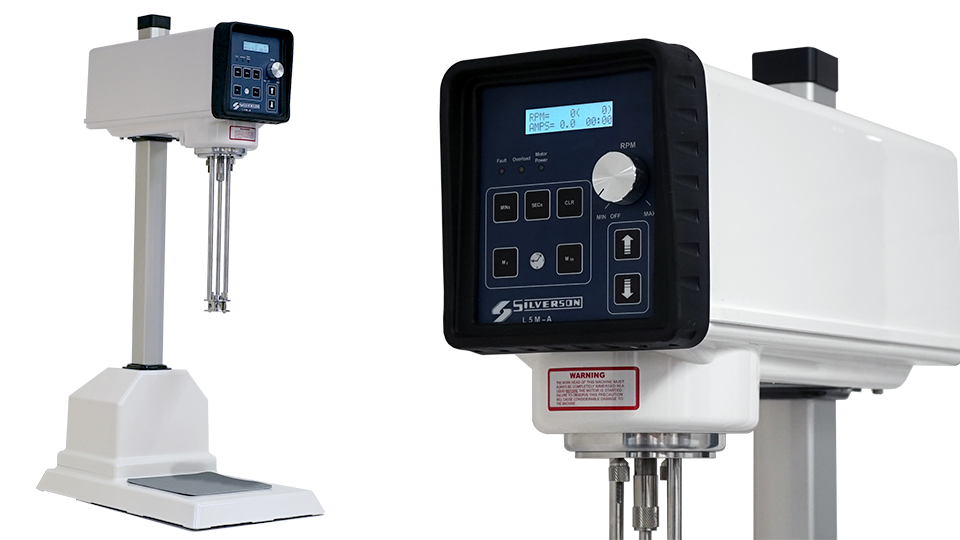
Silverson High Shear Lab Mixer
Food-Contact Materials: FDA and EU Rules
“FDA compliant” or “FDA approved” on a seal, gasket or belt means the material meets US food-contact regulations under Title 21 of the Code of Federal Regulations. The US Food and Drug Administration does not certify machines, so an FDA claim describes a material, not an assembly. The European equivalent is Regulation (EC) 1935/2004, the framework regulation for food-contact materials, supported by specific measures such as Regulation (EU) 10/2011 for plastics.
New Zealand has no positive list of approved food-contact materials. Businesses operating an RMP or food control plan are responsible for identifying hazards from materials that contact food, and guidance from Food Standards Australia New Zealand advises checking with suppliers that materials meet US requirements, AS 2070 or another appropriate international standard acceptable to MPI. In practice, FDA or EU declarations of compliance for product-contact parts are the documents to ask for.
Hazardous Areas: ATEX, IECEx and AS/NZS 60079
Many dry powders, including milk powder, flour, sugar, starches and pharmaceutical actives, are combustible dusts. ATEX is the European Union’s framework for equipment used in explosive atmospheres, and IECEx is the international certification scheme. New Zealand’s electrical safety regulations cite the IEC-aligned AS/NZS 60079 series, and equipment installed in a hazardous area must be correctly rated for its zone. Updated cited standards, including AS/NZS 60079.14:2022 for installation, must be used for new work from 12 November 2026. Among APS partners, Hanningfield self-certifies its Uni-Mill and Kwik-Sift to ATEX Zone 0/20, and Dinnissen holds ATEX certification for its Pegasus mixers.
An ATEX rating is useful evidence of how a machine is protected, but zone classification and installation in New Zealand follow AS/NZS 60079. Our article on combustible dust, ATEX and IECEx covers zones, equipment categories and protection types in detail.
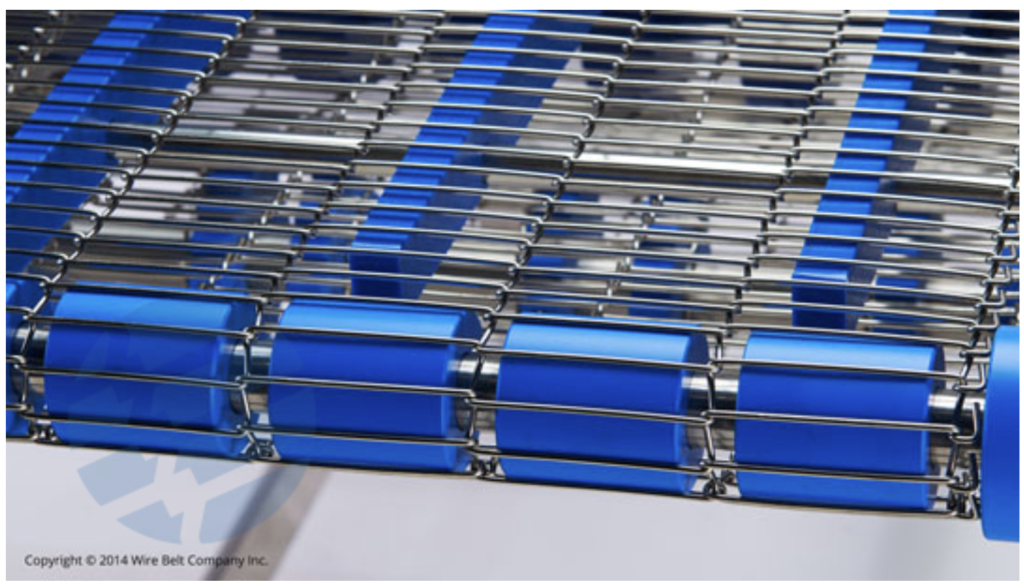
Wirebelt Flat Flex
Machinery and Electrical Safety: CE, UKCA and UL
CE marking shows conformity with European Union product legislation, including machinery safety. UKCA is the British equivalent, and UL 508A covers industrial control panels for the North American market. None of them is a New Zealand legal requirement. Under the Health and Safety at Work Act 2015, designers, manufacturers, importers and suppliers of plant each have a duty to ensure, so far as is reasonably practicable, that it is without risks to health and safety, and electrical equipment is expected to comply with recognised safety standards, normally NZS or AS/NZS. A CE or UKCA mark is good evidence that a machine was designed against a structured safety standard, but it does not replace a New Zealand risk assessment of the installation.
Pharmaceutical Manufacturing: GMP, 21 CFR Part 11 and Validation
Medsafe’s Code of Good Manufacturing Practice is aligned with the PIC/S Guide to Good Manufacturing Practice. GMP applies to the manufacturer rather than the machine, so equipment described as “GMP compliant” or “meeting cGMP” is designed to support GMP (cleanable, contained and documented) rather than certified to it.
Two further items matter to pharmaceutical buyers. 21 CFR Part 11 is the US FDA regulation on electronic records and electronic signatures, relevant to machine controls that store batch data. Validation documentation, meaning functional and design specifications, factory and site acceptance tests (FAT and SAT), installation and operational qualification (IQ and OQ) and EN 10204 3.1 material certificates, is usually supplied as a package with the machine and needs to be specified at order.
Planning a processing or packaging project?
Speak with Advanced Packaging Systems about equipment selection, line integration, and local support in New Zealand.
- Local technical and commercial support in New Zealand.
- Obligation-free advice on equipment and line fit.
- Useful next steps, even if your project is still early-stage.
Company Certifications: ISO 9001, 14001 and 45001
ISO 9001 (quality management), ISO 14001 (environmental management), ISO 45001 (occupational health and safety) and ISO/IEC 27001 (information security) certify a manufacturer’s management systems. They are a reasonable indicator of how consistently a supplier designs, builds and documents its equipment, but they are not a certification of any machine.
Certifications Held by APS Partners
The table below summarises what the manufacturers Advanced Packaging Systems represents state about their certifications, using their own terms. Where a certification applies to specific models or is an option, that is noted. Certificates for a specific machine and configuration should always be confirmed at quotation.
| Partner | Hygienic design | Food-contact materials | Hazardous area | Pharmaceutical | Company and other |
|---|---|---|---|---|---|
| Silverson | 3-A TPV certified sanitary range; EHEDG-certified shaft seals, with fully EHEDG-certified ultra-hygienic in-line models available | cGMP, FDA and EC 1935/2004 documentation packages available | ATEX-approved motors available | cGMP documentation packages | ISO 14001 |
| Russell Finex | Compact Sieve meets 3-A sanitary standards; Hygiene Filter designed to EN ISO 14159 | Equipment manufactured in compliance with FDA, 3-A and USDA; Hygiene Filter designed to EC 1935/2004 | ATEX and IECEx certified sieves and filters | GMP | ISO 9001; CE and UKCA marked |
| Dinnissen | Designed in accordance with EHEDG guidelines, on request | EC 1935/2004 | ATEX certification for Pegasus mixers and vacuum coaters (Zone 20 internal) | GMP | ISO 9001, 14001, 27001 and 45001 |
| Hanningfield | EHEDG member | FDA-compliant seals; 316L stainless steel contact parts | ATEX Zone 0/20 self-certification for Uni-Mill and Kwik-Sift; ATEX versions available across ranges | 21 CFR Part 11 controls available; validation documentation and EN 10204 3.1 certificates | ISO 9001:2015, ISO 14001 |
| Wire Belt | USDA Accepted (Flat-Flex, Compact-Grid); Enhanced Hygienic conveyors designed to EHEDG guidelines | FDA-approved belt and sprocket materials | – | – | ISO 9001, ISO 14001 |
| Ashworth | Advantage belts certified to NSF/3-A/ANSI 14159-3; USDA Accepted belts; EHEDG member | EU 10/2011 declaration of compliance (Advantage); FDA-approved HDPE (Omni-Lite) | – | – | NSF certification |
| Moba | USDA/3-A approval (egg pasteurising systems) | Egg-contact materials verified to EC 1935/2004 and EU 10/2011 (Omnia PX) | – | – | – |
| Harro Höfliger | – | – | – | EU and US GMP validation packages; 21 CFR Part 11 option | ISO 9001, ISO 14001, ISO/IEC 27001 |
| Pace | – | – | – | Pharma-Line unscramblers designed to meet or exceed cGMP | UL 508A certified panel and CE marking available |
| Filtec | – | – | – | GMP-compliant configurations of fillers and labellers | – |
| Zalkin | – | FDA food-grade seals and bellows | – | – | Weighing module certified for legal metrology |
| Nuovo | – | EU-certified food-grade inks (egg stamping) | – | – | – |
How to Read a Certification Claim
- Who issued it? A certificate names an independent body. A self-declaration or a membership does not.
- Which models does it cover? Certification usually applies to a specific model or configuration, not to a whole range.
- Is it standard or an option? Certified seals, ATEX-rated drives and documentation packages often have to be specified at order.
- What does the wording say? “Certified”, “compliant with”, “designed in accordance with” and “member of” are different claims.
- Can you see the certificate? Ask for it, with its date and scope, before it goes into an RMP or validation file.
Specifying Certified Equipment Through APS
Advanced Packaging Systems is the New Zealand agent for the manufacturers above and can obtain certificates, declarations of compliance and validation documentation for a specific machine and configuration at quotation. If your RMP verifier, export customer or validation team needs particular evidence, raise it at the enquiry stage. It is far simpler to specify certified seals, an ATEX-rated drive or a documentation package at order than to add them later.
Planning a processing or packaging project?
Speak with Advanced Packaging Systems about equipment selection, line integration, and local support in New Zealand.
- Local technical and commercial support in New Zealand.
- Obligation-free advice on equipment and line fit.
- Useful next steps, even if your project is still early-stage.